Join us on the farm as we spend time about every-other week exploring how farm bring food to the table. We will work hands on with chickens, goats, pigs, plants, breads, and butters. We will be planning on outdoor time on the farm. Each class will have take home elements for the students to share with family and friends. This is a great class to expand their knowledge of animal welfare, gardening, and some baking skills. (There will NOT be any live animal dispatching during the classes). The classes are best suited from 7 and up. Please note, this is an approximate schedule noted below. Weather, climate, growing season, etc may cause class topics to be adjusted. Some of the classes are designed to be more indoors for this reason.
Safety: This is a working farm. Care will be taken to help the class participate hands on with as much as possible, safely. Listening to and following directions is key to keep everyone safe. We will be using scissors, sharp tools, going on walks, petting animals, collecting eggs, using cleaners etc. Any participant that is not ready to follow directions will be asked to leave. No refunds will be given. Parents are encouraged to stay and enjoy the farm as well.
Week 1: Laying Chickens & Eggs Sept 9th 10-1
Class Description:
Have you ever wondered where eggs come from before they reach the grocery store? Students will learn about laying hens, egg production, chicken care, and how farmers collect and handle eggs. Students will also discover the different parts of an egg and why eggs are an important food source.
Students Will Learn To:
Identify the basic needs of laying chickens.
Explain how hens produce eggs.
Describe the journey of an egg from farm to table.
Recognize the parts of an egg and their purpose.
Demonstrate safe egg handling practices.
Week 2: Bees & Honey September 16th 10-1
Class Description:
Buzz into the fascinating world of honey bees! Students will learn how bees live and work together in a hive, how they help pollinate plants, and how honey is made. This class highlights the important role bees play in growing many of the foods we eat. Students should wear over ankle solid shoes, long hair tied back, and be prepared to wear a bee suit. They get hot and stuffy. The plan is to look into the bee hives themselves.
Students Will Learn To:
Identify the queen, worker, and drone bees.
Explain how pollination helps plants grow.
Describe the process of making honey.
Understand why bees are important to agriculture.
Recognize ways to help protect pollinators.
Week 3: Edible Fall Garden October 7th 10-1
Class Description:
Students will explore a fall garden and discover vegetables and herbs that grow during cooler weather. They will learn how seeds become food and how farmers care for plants throughout the growing season.
Students Will Learn To:
Identify common fall vegetables and herbs.
Understand the basic needs of garden plants.
Explain the plant life cycle from seed to harvest.
Describe healthy soil and why it matters.
Recognize how gardens provide nutritious food.
Week 4: Bread & Butter October 21st 10-1
Class Description:
From grain to loaf and cream to butter, students will learn how simple ingredients become foods many families enjoy every day. Hands-on activities will demonstrate the science and history behind bread and butter making.
Students Will Learn To:
Identify ingredients used to make bread and butter.
Explain how grain is turned into flour.
Describe how butter is made from cream.
Observe changes that occur during baking.
Understand how farmers contribute to everyday foods.
Week 5: Canning Fruits & Vegetables November 4 10-1
Class Description:
Before refrigerators and freezers, families preserved food through canning. Students will learn how fruits and vegetables can be safely preserved and why food preservation is important for reducing waste and providing food year-round.
Students Will Learn To:
Explain the purpose of food preservation.
Identify fruits and vegetables that can be canned.
Describe the basic steps of the canning process.
Understand the importance of food safety.
Recognize how preserved foods help families and communities.
Week 6: Pigs November 18th 10-1
Class Description:
Students will meet pigs and learn about their behavior, diet, and role on the farm. The class will explore how farmers care for pigs and how pork products make their way from the farm to consumers.
Students Will Learn To:
Identify the basic needs of pigs.
Describe pig behavior and characteristics.
Explain how farmers provide proper care for livestock.
Understand where pork products come from.
Discuss the importance of responsible animal care.
Week 7: Goats December 2 10-1
Class Description:
Goats are curious, hardworking animals that provide milk, fiber, and companionship. Students will learn about goat care, feeding, and the many products that come from goats.
Students Will Learn To:
Identify the basic needs of goats.
Describe how goats are raised on farms.
Explain products that come from goats, including milk and soap.
Understand the importance of animal welfare.
Compare goats to other farm animals.
Week 8: Farm Discovery Day (Flex Week) December 16th 10-1
Class Description:
Every farm is different throughout the year. During this special flex week, students will explore what is currently happening on the farm. Activities may include seasonal harvesting, caring for baby animals, beekeeping, gardening, food preparation, or other exciting farm projects.
Students Will Learn To:
Observe and describe seasonal farm activities.
Ask questions and investigate real-world farming practices.
Connect previous lessons to current farm operations.
Practice observation and critical thinking skills.
Appreciate the diversity of food production on a working farm.
Program Goal
By the end of the series, students will understand that food comes from many different plants and animals, recognize the work involved in producing food, and develop a greater appreciation for farmers, agriculture, and the natural world.
Class fees are not refundable. Each participant will have take home elements and activities are needed during the classes. Resources must be attained prior to the class date. Farm attire is expected. We will be hands on. Dirt and farm go together. Comfortable clothes to work, bend, dig with are ideal. Mud puddles are common on the farm. There is a fridge to put lunches and snacks in as desired. Water bottles are a great idea and your choice of bug sprays may be handy. Thank you. Feel free to reach out with questions
Join us on the farm as we spend time about every-other week exploring how farm bring food to the table. We will work hands on with chickens, goats, pigs, plants, breads, and butters. We will be planning on outdoor time on the farm. Each class will have take home elements for the students to share with family and friends. This is a great class to expand their knowledge of animal welfare, gardening, and some baking skills. (There will NOT be any live animal dispatching during the classes). The classes are best suited from 7 and up. Please note, this is an approximate schedule noted below. Weather, climate, growing season, etc may cause class topics to be adjusted. Some of the classes are designed to be more indoors for this reason.
Safety: This is a working farm. Care will be taken to help the class participate hands on with as much as possible, safely. Listening to and following directions is key to keep everyone safe. We will be using scissors, sharp tools, going on walks, petting animals, collecting eggs, using cleaners etc. Any participant that is not ready to follow directions will be asked to leave. No refunds will be given. Parents are encouraged to stay and enjoy the farm as well.
Week 1: Laying Chickens & Eggs Sept 9th 10-1
Class Description:
Have you ever wondered where eggs come from before they reach the grocery store? Students will learn about laying hens, egg production, chicken care, and how farmers collect and handle eggs. Students will also discover the different parts of an egg and why eggs are an important food source.
Students Will Learn To:
Identify the basic needs of laying chickens.
Explain how hens produce eggs.
Describe the journey of an egg from farm to table.
Recognize the parts of an egg and their purpose.
Demonstrate safe egg handling practices.
Week 2: Bees & Honey September 16th 10-1
Class Description:
Buzz into the fascinating world of honey bees! Students will learn how bees live and work together in a hive, how they help pollinate plants, and how honey is made. This class highlights the important role bees play in growing many of the foods we eat. Students should wear over ankle solid shoes, long hair tied back, and be prepared to wear a bee suit. They get hot and stuffy. The plan is to look into the bee hives themselves.
Students Will Learn To:
Identify the queen, worker, and drone bees.
Explain how pollination helps plants grow.
Describe the process of making honey.
Understand why bees are important to agriculture.
Recognize ways to help protect pollinators.
Week 3: Edible Fall Garden October 7th 10-1
Class Description:
Students will explore a fall garden and discover vegetables and herbs that grow during cooler weather. They will learn how seeds become food and how farmers care for plants throughout the growing season.
Students Will Learn To:
Identify common fall vegetables and herbs.
Understand the basic needs of garden plants.
Explain the plant life cycle from seed to harvest.
Describe healthy soil and why it matters.
Recognize how gardens provide nutritious food.
Week 4: Bread & Butter October 21st 10-1
Class Description:
From grain to loaf and cream to butter, students will learn how simple ingredients become foods many families enjoy every day. Hands-on activities will demonstrate the science and history behind bread and butter making.
Students Will Learn To:
Identify ingredients used to make bread and butter.
Explain how grain is turned into flour.
Describe how butter is made from cream.
Observe changes that occur during baking.
Understand how farmers contribute to everyday foods.
Week 5: Canning Fruits & Vegetables November 4 10-1
Class Description:
Before refrigerators and freezers, families preserved food through canning. Students will learn how fruits and vegetables can be safely preserved and why food preservation is important for reducing waste and providing food year-round.
Students Will Learn To:
Explain the purpose of food preservation.
Identify fruits and vegetables that can be canned.
Describe the basic steps of the canning process.
Understand the importance of food safety.
Recognize how preserved foods help families and communities.
Week 6: Pigs November 18th 10-1
Class Description:
Students will meet pigs and learn about their behavior, diet, and role on the farm. The class will explore how farmers care for pigs and how pork products make their way from the farm to consumers.
Students Will Learn To:
Identify the basic needs of pigs.
Describe pig behavior and characteristics.
Explain how farmers provide proper care for livestock.
Understand where pork products come from.
Discuss the importance of responsible animal care.
Week 7: Goats December 2 10-1
Class Description:
Goats are curious, hardworking animals that provide milk, fiber, and companionship. Students will learn about goat care, feeding, and the many products that come from goats.
Students Will Learn To:
Identify the basic needs of goats.
Describe how goats are raised on farms.
Explain products that come from goats, including milk and soap.
Understand the importance of animal welfare.
Compare goats to other farm animals.
Week 8: Farm Discovery Day (Flex Week) December 16th 10-1
Class Description:
Every farm is different throughout the year. During this special flex week, students will explore what is currently happening on the farm. Activities may include seasonal harvesting, caring for baby animals, beekeeping, gardening, food preparation, or other exciting farm projects.
Students Will Learn To:
Observe and describe seasonal farm activities.
Ask questions and investigate real-world farming practices.
Connect previous lessons to current farm operations.
Practice observation and critical thinking skills.
Appreciate the diversity of food production on a working farm.
Program Goal
By the end of the series, students will understand that food comes from many different plants and animals, recognize the work involved in producing food, and develop a greater appreciation for farmers, agriculture, and the natural world.
Class fees are not refundable. Each participant will have take home elements and activities are needed during the classes. Resources must be attained prior to the class date. Farm attire is expected. We will be hands on. Dirt and farm go together. Comfortable clothes to work, bend, dig with are ideal. Mud puddles are common on the farm. There is a fridge to put lunches and snacks in as desired. Water bottles are a great idea and your choice of bug sprays may be handy. Thank you. Feel free to reach out with questions


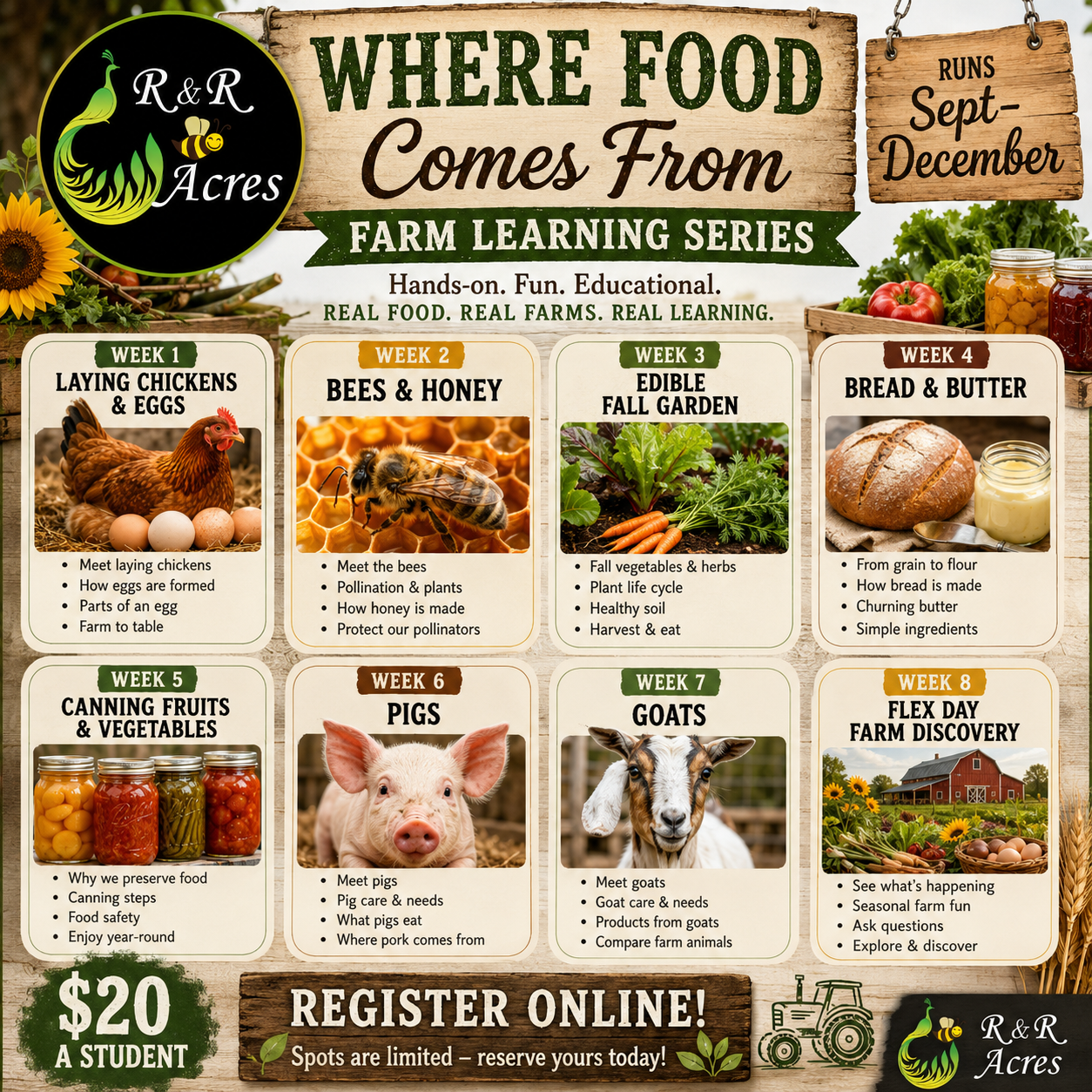 Image 1 of 1